Railway Electrification
Electrification infrastructure provides the immense energy required to move heavy trains, improving performance and enabling carbon-neutral operations when paired with renewable grids.
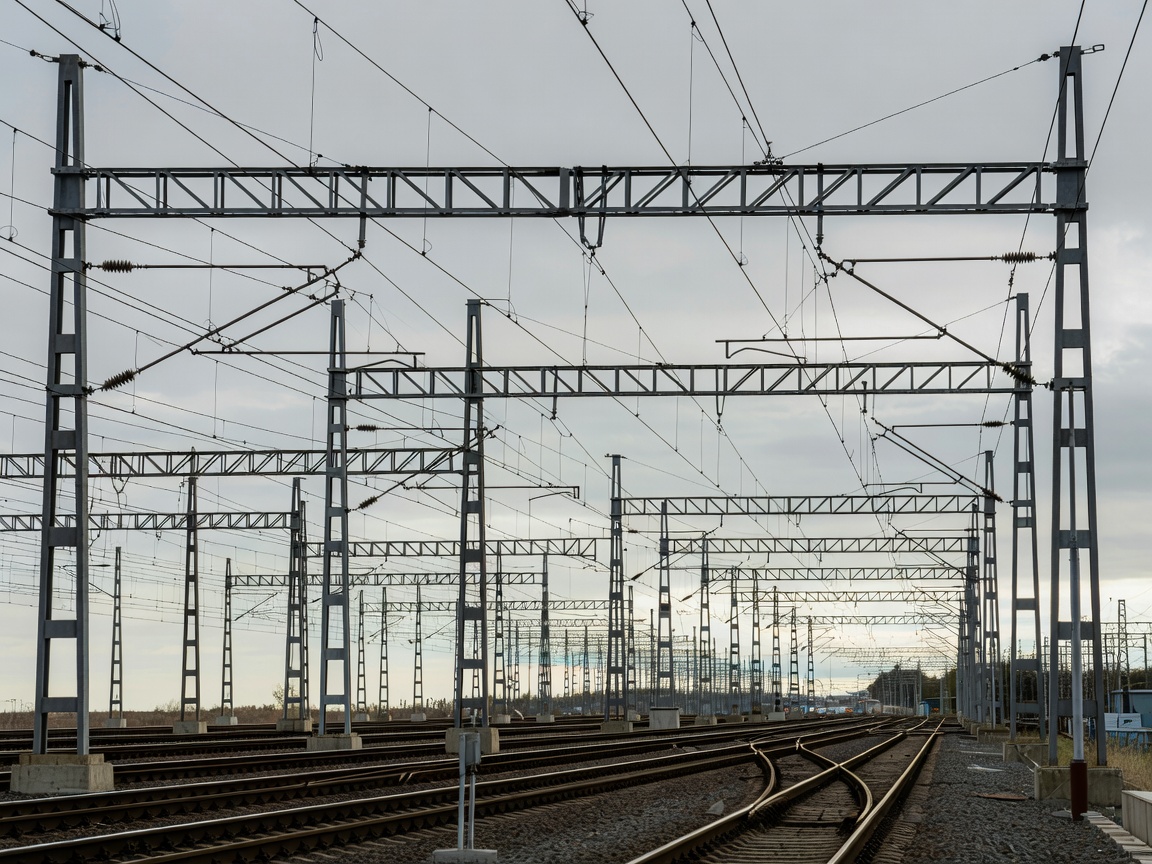
Overhead Line Equipment (OLE)
Overhead systems (or catenary) suspend a contact wire above the track. A 'pantograph' mounted on the roof of the train slides along the underside of this wire to draw current (typically 25kV AC).
The contact wire is not strung straight; it zig-zags slightly relative to the center of the track (the 'stagger'). This ensures it sweeps back and forth across the carbon strip of the train's pantograph, causing even wear rather than cutting a groove into it.
Substations and Power Supply
Power is drawn from the national high-voltage grid into railway substations. These facilities step the voltage down (or rectify it to DC) and feed it into specific sections of the railway line. The return path for the electrical circuit is usually achieved through the running rails, requiring careful electrical bonding of the track.